Understanding Rain Screen Wood Siding Systems

Rain Screen Wood Siding Principles

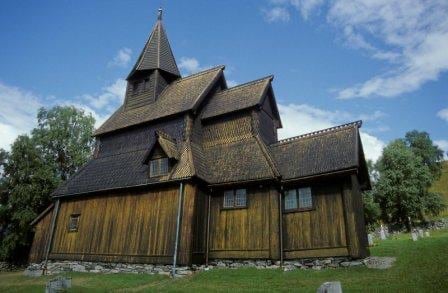
Rain screen siding technology has been in existence since as early as the 12th century A.D. Some wooden stave churches in Norway that were built in the late 1100's using early rain screen wood siding technology are still in existence today. Many Japanese temples were also built about the same time using similar rain screen siding principles.

Norwegian stave church from the 1100's using rain screen siding principles

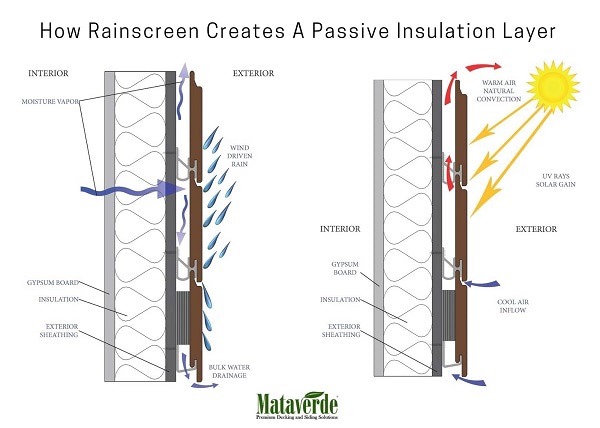
The rain screen siding principle is straightforward: first build an outside wall and weatherproof it (building envelope), secondly construct an outer layer of siding (rain screen) to keep the weather (rain, snow and sun) away from the inner wall. The air space in the wall cavity between the building envelope and the rain screen allows moisture to escape and also creates a passive insulation layer.

Unlike masonry curtain wall construction where moisture is nearly trapped in the wall cavity, a proper wood rain screen siding system should be an open-joint rain screen system or a ventilated wood siding system. With a wood rain screen system, moisture from inside the structure passes to the outside and water that penetrates through the joints in the rain screen can also escape.
The University of Alaska Fairbanks Cooperative "Exterior Ventilated Cladding"- research on rain screen siding principles Extension Service published an excellent research paper on the subject of exterior ventilated cladding systems. This research titled, "Exterior Ventilated Cladding" explains the building science behind rain screen systems and rain screen siding principles.

The rain screen siding is the first layer of defense from the elements including wind driven rain. An open joint ventilated rain screen is considered a pressure-equalized system. This means that when winds are blowing against the surface of the rain screen, some of the pressure passes though creating back-pressure.  In theory this pressure is exactly equal. In reality there are hardly ever ever "static" pressures; the wind changes directions and pressure (dynamic pressure).  The best designed wood rain screen systems have large amounts of unrestricted air flow behind the rain screen and are firmly fastened to the building envelope.

The Institute for Research in Construction,Pressure Equalization in Rain Screen Systems- Rain screen principles
National Research Council of Canada published an excellent research paper titled, "Pressure Equalization in Rain Screen Wall Systems". Click on the icon to the right to view this whitepaper.

In the early 1970's, the first "energy crisis" spawned a new generation of energy efficient weather tight home and building designs.  These new super-insulated designs did an excellent job of reducing the energy costs for heating and cooling. They were often so tightly sealed, however, that moisture was trapped within. the need for effective rain screen siding systems was now needed for residential and light commercial construction.

The US Department of Energy published an extensive study of the effects of moisture and proper methods of dealing with trapped moisture. This 273 page study offers a comprehensive understanding of moisture issues and several methods of mitigating these problems. This building science research paper is titled, Moisture Control Handbook outlines many reasons why buildings should have a rain screen siding design to deal with moisture issues"Moisture Control Handbook" and explores a multitude of topics including:

  • Mold, mildew and condensation
  • Thermal bridging
  • Effective surface drainage
  • Wetting and drying of building assemblies
  • Moisture Control for warm, cold and mixed climates

Effective rain screen siding systems solve a myriad of issues addressed in these research studies.  While rain screen siding systems do not resolve all moisture issues in a building design, properly designed rain screen systems create an excellent method for moisture to escape through the building envelope while promoting a healthier environment within the structure.

A common misconception about rain screen wood siding systems is that they are only effective in keeping rain off the structure. It is true that properly designed rain screen wall systems keep bulk rain water away from the building envelope.  It is also equally true that the proper spacing in the wall cavity of a well designed rain screen system is the key to effective moisture management from within the structure.

The Canadian Wood Council has published an excellent research paper about key design concerns that should be considered prior to building a project. The paper is titled, "Wood Specification: Durability". Wood Specifications: DurabilityThis 2 page paper is a "must read" article for architects, builders or owners before designing your project. It deals with topics such as; why a durable high performance wood building envelope adds value, how to include durability cocerns into your design, life cycle cost considerations, how to minimize the premature deteriation of wall systems and lots more.

Advantages of rain screen wood siding technology

This "layered" rain screen siding system creates a multitude of benefits:

  • The inner wall is first weatherproofed to keep the weather from entering into the interior of the structure (building envelope).
  • The outer wood siding keeps the weather away from the structure (this siding serves as the "rain screen").
  • The open space between the layers of the rain screen system allows trapped moisture to escape and also creates an energy-efficient air space that acts as an insulator. This layer helps buffer the transmission of both cold and heat.
  • Removing trapped moisture creates a healthier environment both inside and outside the building envelope.
  • Rain screen wood siding sytems are naturally beautiful!

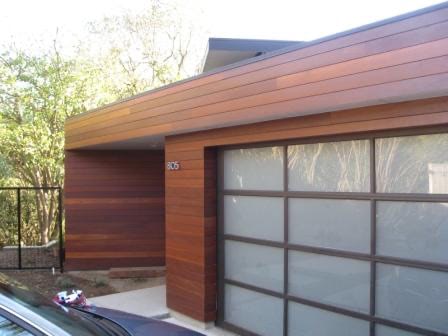
Climate-Shield rain Screen Wood Siding System installation using FSC Machiche hardwood siding

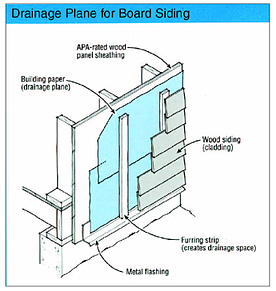
Until recently, the only rain screen wood siding system option were rain screen designs that required furring strips. Using furring strips in a rain screen siding system creates the proper 3/4' spacing in the wall cavity to allow for adequate moisture elimination. Rain screen systems that use furring strips are considerably better than a non-ventilated wall system.

Typical rain screen wood siding detail using furring strips:

typical rain screen siding detail resized 345

The main disadvantages of a typical rain screen application using furring strips  include:

1.) Air flow and moisture is restricted to individual wall cavity chambers created between the furring strips. Cross flow of air between the chambers is not possible.

2.) The furring strips provide thermal bridging to the building envelope. At 16" on center spacing, there is typically upwards of 16% of the building envelope surface area in direct thermal contact with the furring strips.

3.) The furring strips themselves trap moisture behind them and become a viable food source for molds and mildews. Mold and mildew promote rot and decay and can create an unhealthy environment and structural damage outside the building envelope.

4.) Additionally the furring strips themselves inhibit the free flow of moisture from inside the building to escape. Since this occurs over nearly 17% of the building envelope, a considerable amount of moisture is trapped inside the home or building.  This creates additional opportunities for mold and mildew to develop-inside the structure. This can create an unhealthy environment inside the home.

5.) The labor costs and material costs of a rain screen application using furring strips are considerably higher than alternative rain screen system options.

6.) In vertical siding applications, complex furring strip designs are required, often using multiple layers of furring strips.

The Climate-Shield Rain Screen Wood Siding System creates a paradigm shift for rain screen wood siding system design.

 Climate Shield Rain Screen System detail with 1x6 wood siding and Climate Shield Starter Rail resized 345

While there are a few rain screen hidden fastener clip systems on the marke,t none perform as well as the Climate-Shield Rain Screen Wood Siding System. The Climate Shield Rain Screen Clip and the system's patented technology allows architects, builders and owners the ability to design rain screen siding sytems for horizontal, vertical or diagonal rain screen siding installations. There is no need to be concerned with designing complicated furring strip layouts. The Climate-Shiled rain Screen Clip acts as its own spacer, uniformly, each time and every time.

Climate-Shield rain screen siding system using high density hardwood siding material

When you use the Climate-Shield Rain Screen Wood Siding System:

There is no need to worry about water being trapped behind traditional furring strips because no furring strip is needed! The Climate Shield rain screen clip provides the proper spacing off the side wall and can be screwed directly into suitable exterior sheathing. This means that the cost of the furring strips and the cost to install them is eliminated from the building budget.

LEARN MORE ABOUT THE RAIN SCREEN SIDING COMPONENTS TO DESIGN THE CLIMATE-SHIELD RAIN SCREEN WOOD SIDING SYSTEM


Climate-Shield™ Rain Screen Wood Siding

Follow Me

Additional Rain Screen Information

Back to Wood Siding Systems

Rain Screen Siding Photo Gallery

Installation Guidelines

architectural-specifications

download-the-quotultimate-guide-t

free-rain-screen-wood-siding-syste

request-rain-screen-siding-samples

Request Additional Information

Climate-Shield Rain Screen Wood Siding System Principles

Climate-Shield Rain Screen Wood Siding System is the most innovative rain screen system available

The Climate-Shield Rain Screen Wood Siding System was developed with the following principles in mind:

  • Create a consistent 3/4" ventilated wall cavity without using furring strips
  • Eliminate food source for mold and mildew
  • Find a simpler way to create vertical wood siding rain screen designs
  • Eliminate wood siding waste on the job site
  • Reduce rain screen construction labor costs
  • Improve construction cycle time
  • Improve moisture management by improving air flow from inside the building

The Climate-Shield Rain Screen Wood Siding System addresses all the issues listed above and a whole lot more.  While the Climate-Shield Rain Screen Wood Siding System was being developed and tested in the field it was also discovered that:

  • The small surface size of the Climate-Shield Rain Screen Clip minimizes thermal bridging
  • By eliminating the furring strips, the materials that are in direct contact with the surface area of the building envelope was reduced more than sixfold.
  • Wood siding installers love the speed and simplicity of the rain screen system
  • High density hardwood siding species such as Ipe siding, Cumaru siding, Garapa siding and FSC Machiche siding are excellent wood siding species for use in a rain screen wood siding system

ADDITIONAL BENEFITS OF THE CLIMATE-SHIELD RAIN SCREEN WOOD SIDING SYSTEM

The Climate-Shield rain screen clip and fasteners are the heart of the rain screen wood siding system. The two stainless steel screws provide a solid and dependable rain screen assembly to fasten the rain screen clip securely to the plywood sheathing.

Climate-Shield Rain Screen Siding ClipClimate-Shield Rain Screen Clip Assembly

The Climate-Shield Rain Screen Clip is stronger, sturdier and longer lasting than other rain screen clips. Installation of the Climate-Shield rain screen clip is much simpler and less costly than other methods.

  • Unlike other rain screen clips, the screws of the Climate-Shield rain screen clip are fastened straight into the sheathing eliminating the need to work at an awkward downward angle.
  • The two screws of the Climate-Shield rain screen clip provide a stronger base.
  • Climate-Shield Rain Screen Clips eliminate the expense and inconsistency of furring strips
  • Climate-Shield Rain Screen Clips eliminate the labor of installing the furring strips.
Climate Shield rainscreen clip compared to other rain screen clips resized 345Climate-Shield Rain Screen Clip compared to other rain screen clips

The Climate-Shield rain screen clip offers clear advantages compared to other rain screen fastening methods:

  • Wide body of the Climate-Shield rain screen clip allows two stainless steel screws for secure and level fastening
  • Heavy duty marine grade aluminum alloy of the Climate-Shield rain screen clip is rugged and long lasting
  • Compatibility of the two metals prevents galvanic action and degradation of the Climate-Shield rain screen clip system
  • Smooth contours of the Climate-Shield rain screen clip design minimize sharp edges providing easier and safer on-site handling
  • High quality US manufacturing standards of the Climate-Shield rain screen clip ensure a uniform spacing off the sidewall and eliminate the necessity of furring strips

 Climate-Shield Wood Siding Profile is Unique

The unique design of the wood siding profile is used exclusively in the Climate-Shield Rain Screen Wood Siding System. The rain screen wood siding profile has a number of benefits that are only found in the Climate-Shield Rain Screen System:

Climate-Shield rain screen wood siding profile is designed properly 

  • The edges of the wood siding are intentionally rounded. This provides for safer handling during installation.
  • The smooth edges also provide a softer appearance and minimize the potential for splintering after installation.
  • The front of the bottom edge covers the top edge of the siding below making this hidden fastener system nearly invisible...even from below.
  • The narrow gap between each course of siding provides adequate ventilation.
  • The cleverly angled profile makes it very difficult for even wind-driven rain to penetrate the rain screen

In addition to the standard rain screen wood siding profile shown above, a wide variety of different face profiles are also available for your rain screen wood siding materials

SEE ADDITIONAL RAIN SCREEN WOOD SIDING PROFILE OPTIONS HERE


 HARDWOOD SIDING SPECIES AVAILABLE FOR THE CLIMATE-SHIELD RAIN SCREEN WOOD SIDING SYSTEM 

A number of different wood siding species can be used effectively with the Climate-Shield Rain Screen Wood Siding System.  The key considerations for selecting the right wood siding material for your rain screen system should include:

  • Durability of the wood siding species - the Climate-Shield rain screen system is designed to last for a long time- your wood siding species should, too.
  • Stability of the wood siding species- lots of movement and shrinkage is not a good thing in any rain screen siding project. Choose a wood siding species with high stability and minimal movement for your rain screen system.
  • Beauty of the wood siding species- why use ugly wood when ther are so many beautiful wood siding species available?

Here are a few high density hardwood siding species that are beautiful, stable and highly durable:

Ipe Hardwood Siding for Climate-Shield rain screen system applications

Ipe hardwood siding for rainscreen siding applications


Cumaru Hardwood Siding for Climate-Shield rain screen system applications

describe the image


Garapa Hardwood Siding for Climate-Shield rain screen system applications

describe the image

LEARN MORE ABOUT WOOD SIDING SPECIES AND WOOD SIDING MATERIAL OPTIONS FOR YOUR RAIN SCREEN SYSTEM