
When architects discuss sustainability in their designs, their guiding principles are to not harm the environment and to improve the health, safety and well-being of the building’s occupants. Mataverde® building materials incorporate these same principles in all our decking, cladding, and lumber building materials. Here’s how.
How Mataverde Products Foster Sustainability
All our building materials go through rigorous screening before we add them to our product line. Sustainability, longevity of products, exceptional quality, protecting the natural and built environment are a few of our core values. Even our trademark name, Mataverde, means “green forest” in Portuguese. Here are a few of our selection criteria and what we’re doing about it.
Sustainable Harvesting of Lumber
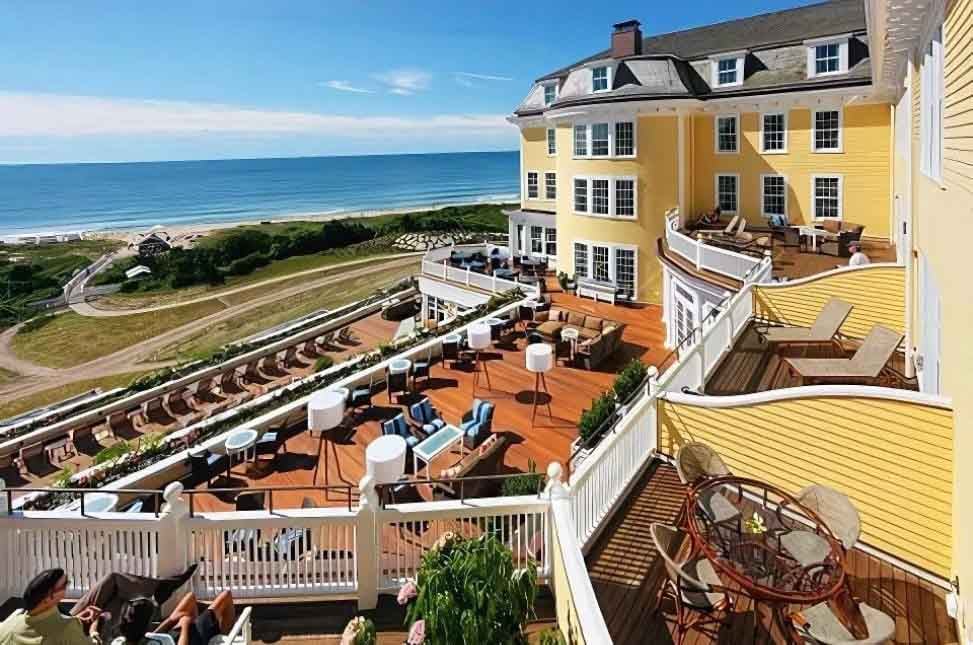
Are Mataverde wood decking and siding products harvested sustainably? Yes, absolutely. We only choose wood products that are responsibly sourced and harvested with low impact on the environment. Responsible stewardship and environmental preservation are core values with Mataverde building materials.
All Mataverde wood species – from high density hardwoods to native North American woods – are sustainably sourced with effective forest management programs in place. Mataverde real wood products are available FSC Certified, Rainforest Alliance certified, PEFC certified and other chain of custody options. Regardless of the certification of our various building materials, all Mataverde wood products are harvested sustainably.
RELATED: LEARN MORE ABOUT RESPONSIBLE ENVIRONMENTAL STEWARDSHIP HERE
Energy Efficiency
When you think about energy efficiency, LED lighting, high performance insulation and efficient heating and cooling come immediately to mind. And they should. They reduce costs and minimize impact on the environment.
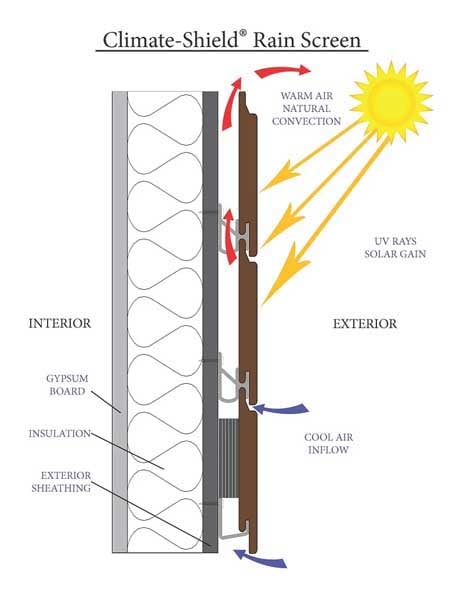
But did you know that a well-designed rainscreen system can help reduce negative energy impacts, too? The passive energy savings of an effective rainscreen are often overlooked. The Climate-Shield Rainscreen System creates natural cooling with convective air currents by its design. This system eliminates heat before it even enters the home or building. Here’s how:
Download the acclaimed whitepaper, "The Ultimate Guide to Building Green with Wood Rainscreen" today

Healthy Indoor Environment
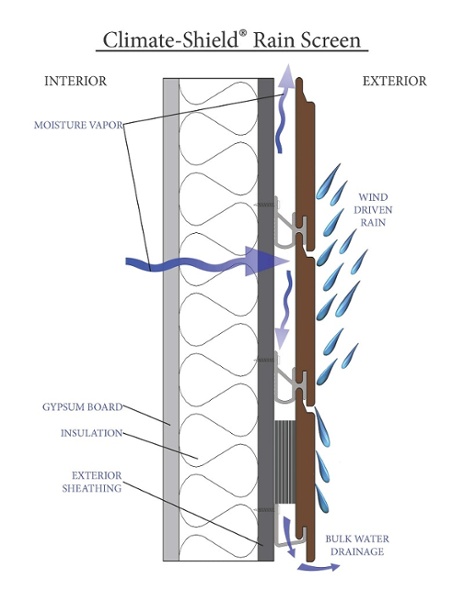
You wouldn’t think that exterior building materials and designs could have much of an effect on indoor air quality, but they certainly can. For example, the Climate-Shield® rainscreen system is highly effective at controlling moisture and minimizing mold and decay before it has a chance to wreak havoc on the building envelope and penetrate inside the dwelling.
Mold is one of the leading causes of a poor health environment indoors. In fact, mold remediation has become more than a $1.2 billion dollar industry in the US alone. The Climate-Shield rainscreen system minimizes the potential of mold infiltration from outside your home. It also helps moisture that is trapped inside your home to escape, especially in wet areas like kitchens and bathrooms where mold often develops first. Here’s how.
Life Cycle Impact
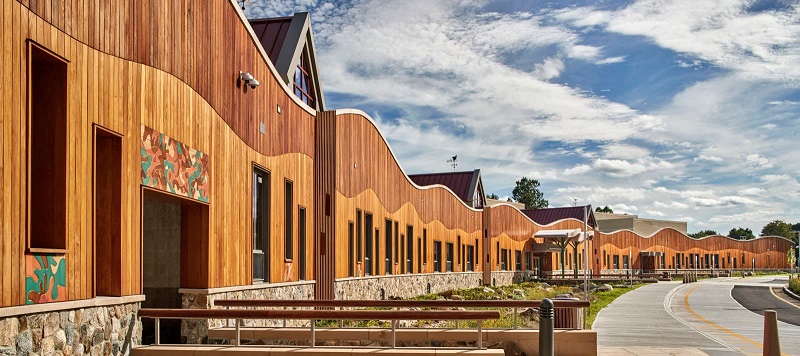
Part of what makes building materials sustainable is their lifespan. Long-lasting, durable, wood species that can withstand harsh weather and environmental conditions can extend the lifetime of not only the exterior, but the entire home or structure as well. Mataverde wood species are chosen for the durability and long-lasting mechanical properties and characteristics.
- Long lasting
- Low maintenance
- Low life-cycle costs
- High return on investment
- Reusable
- Recyclable
Protect the Environment
Protecting the environment goes beyond sustainable forestry. Wood is a renewable natural resource. Not only that, but wood is naturally beautiful, creating a warm embracing, built space, either indoors or outdoors. Here are some of the key reasons architects and design professionals continue to choose wood for their project designs. The sustainable and wood-based building materials market continues to expand.

Reduced Carbon Footprint
Wood is widely known to have an exceptionally low carbon footprint. Trees absorb carbon dioxide from the atmosphere and give off oxygen (photosynthesis). The tree grows and retains more carbon, even after they are cut. Wood timber, decking, siding, hold the carbon throughout their usable life cycle. They’re like a little carbon storage box.
There’s a great article by the American Wood Council that has a terrific chart showing how the whole natural cycle works, from the forest to end of use of the wood materials.
Numerous research studies from the USDA Forest Products Laboratory, and others, explain how the embodied carbon in wood (trees absorb carbon dioxide) works. There are other factors, too,
- Wood holds and stores carbon (carbon sequestration)
- Low energy use. Manufacturing wood products uses a whole lot less energy than producing concrete, steel, aluminum and other building materials
- Wood is a natural and renewable resource. It contains no plastics or non-renewable petroleum-based products (like vinyl siding, composite decking, composite siding)
- Minimal waste. More than 95% of the logs are used to create various products including lumber, siding, decking and many more.

Putting it All Together
Mataverde is committed to a healthier world, in both the natural and the built environment. Here a few of our building materials that can help you.
- Environmentally friendly real wood decking
- Eco-friendly real wood siding and lumber
- Rainscreen systems for siding and soffits to improve health and building performance
- Utilizing wasted rooftop space with eco-friendly rooftop decks
- Fire retardant treated lumber, decking, siding and fencing to help you safely protect your home and property from fires
If sustainability, sustainable design, and environmentally friendly construction are important to you, consider Mataverde wood building materials for your next project. Thank you.


Related Posts