
Modern construction in fire risk zones demands materials that are both incredibly safe and environmentally responsible. Historically, achieving maximum fire safety (Class A rating and ignition resistant) meant relying on harsh chemical treatments, a tough trade-off for sustainability-focused builders and architects. And, aesthetically, these materials were disappointing. Mataverde SaferWood is the necessary evolution.
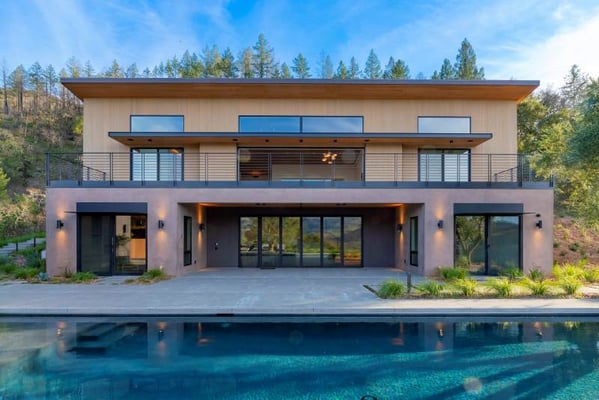
 Stainable Mataverde SaferWood vertical siding in ThermaWood FR Hem-Fir was chosen for this wildfire rebuild of a home and outbuilding surrounded by an environment of regrowth
This is about more than just code compliance; it’s the future of sustainable, safe construction that protects both people and the planet. Popular alternatives to fire-retardant treated wood like fiber cement and wood composites are great solutions but aren't the look and warmth of real, sustainable wood that's in demand.
Mataverde SaferWood is changing the FRTW (fire-retardant treated wood) landscape with a permanent, non-leaching formula and a mar-free, premium grade lumber for siding, decking, fencing, and dimensional lumber.
Treated with the proprietary Thermex-FR® process, Mataverde SaferWood delivers permanent, non-toxic, Class A, WUI approved protection while completely avoiding the environmental issues of conventional chemical treatments.
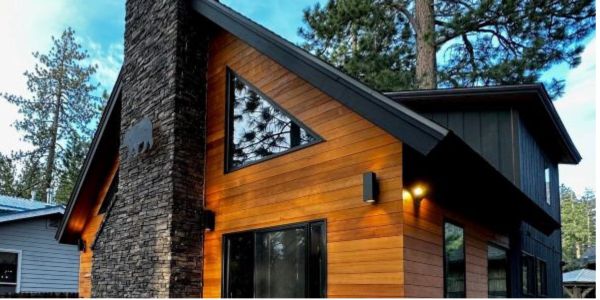
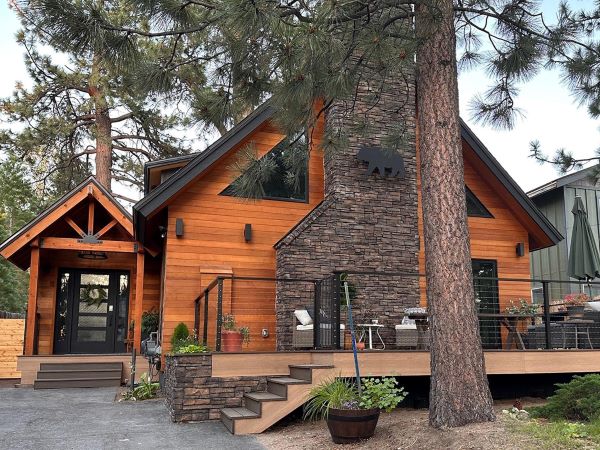 Mataverde SaferWood nickel gap siding was specified on this exterior renovation project in Lake Tahoe
Performance and Looks You Can Depend On
Mataverde SaferWood delivers the highest level of fire protection and achieves a Class A fire rating (the best possible). Since the treatment is fixed and permanent, this critical fire protection lasts for the material's entire lifetime, it will never fade or wash away or leach into the surrounding soil and water. Let's dive into that next, but beyond its fire resistance, Mataverde SaferWood:
-
Is non-corrosive
-
Ignition resistant
-
Exhibits excellent moisture and insect resistance
-
Mar-free surface, premium appearance grade
-
Has clear vertical grain options available
-
Is fire retardant treated with a non-toxic, eco-friendly process
-
Offers great design flexibility.
-
It’s paintable and stainable, and can be refinished.
-
Comes in multiple species to choose including thermally modified hemlock and western red cedar.
%20ThermaWood%20FR%20Hem-Fir%20Siding%20Project%202024/ThermaWood%20FR%20Hem-Fir%20Siding%20exterior%20soffit%20view%20The%20Ridge%20House%20project%20CA.jpg?width=973&height=504&name=ThermaWood%20FR%20Hem-Fir%20Siding%20exterior%20soffit%20view%20The%20Ridge%20House%20project%20CA.jpg) A closer view of the living area of wildfire rebuild home featuring Mataverde Saferwood in ThermaWood FR siding and soffits and ThermaWood Hem-Fir interior, including ceilings walls
A closer view of the living area of wildfire rebuild home featuring Mataverde Saferwood in ThermaWood FR siding and soffits and ThermaWood Hem-Fir interior, including ceilings walls
Ready to see it for yourself? Order samples of Mataverde SaferWood Siding, Decking and more

The Conflict: Fire Safety vs. Environmental Safety
We all rely on fire-resistant (FR) materials to meet fire safety codes and protect lives. But here’s a crucial concern for sustainable builders: even newer, safer fire-retardant chemicals introduce a new, invisible risk. They might slow a fire, but they aren't necessarily permanently attached to the material. This non-permanence means the chemicals can eventually wash off or otherwise get loose and pollute the environment.
.jpg?width=973&height=645&name=ThermaWood%20FR%20thermally%20modified%20wood%20siding%20and%20soffits%20in%20Boise%2c%20Idaho-1%20(1).jpg) Mataverde SaferWood does not require fire-retardant treated wall assemblies as backing, so siding and soffits are easier to design and install.
Mataverde SaferWood does not require fire-retardant treated wall assemblies as backing, so siding and soffits are easier to design and install.
Brominated Flame Retardants (BFRS):
This issue is most critical when discussing a common and older use of fire-retardant. The main issue with Brominated Flame Retardants (BFRs)is simple: they don't stay in the material. Because BFRs are surface applied to building materials they can slowly wash out, leak, or rub off products. When materials treated with BFRs are exposed to rain, weather, or are eventually disposed of, these chemicals migrate into the soil, water, and air, becoming long-term pollutants.
BFRS "leaking" out (leaching) is a serious environmental and health issue backed by strong research. According to a recent scientific review on flame retardants in soils (NIH.gov, Trang Le Thuy et al., 2025), BFRs are a major focus of alarm. The research highlights several critical environmental and health liabilities:
-
They resist breaking down and build up in living organisms.
-
They are prone to accumulating in soil and can move up the food chain, potentially threatening natural systems.
-
Exposure to BFRS poses serious health issues, including problems with brain development, hormone system disruption, and an increased likelihood of cancer.
Zinc Borate (Boric Acid)
Zinc Borate is used as a fire retardant in combination with polymers and to lend durability to engineered wood and wood-plastic composite building materials like siding.
Zinc Borate is water soluble and washes off or leaches from fire-retardant building materials like siding when exposed to rain and weather or after disposal. The leached chemical leaves more of the soluble boride than insoluble zinc behind and becomes an environmental hazard. (NIH.gov) Boric acid is harmful to plants and aquatic life and can inhibit plant growth in soil. (NPIC.ORST.edu)
While sidings that use Zinc Boride are treated to be water resistant. Be sure to consider that:
-
Cut ends must also be treated to maintain their fire resistance.
-
The material needs to be repainted or sealed regularly to maintain water resistance.
-
It is not a permanent exterior fire-retardant treatment solution.
 This stock photo shows an example of the damage to composite siding allows moisture in and potentially lets fire-retardant leach out over time
Concrete (Portland Cement):
The environmental impacts of fiber cement leaching primarily relate to the increase in water pH (alkalinity) and the potential release of trace heavy metals into the surrounding soil and water, especially as the material ages or is demolished.
If fiber cement is damaged or no longer sealed, water exposure will degrade it and leach calcium and hydroxide ions. These hydroxide ions are highly alkaline with a high PH. (ecology.wa.gov)
Portland cement, a main ingredient of fiber cement siding, can leach heavy metals into the ground and groundwater as the material ages or breaks. (buildinggreen.com)
The effects these contaminants have on the environment are:
-
High-pH entering nearby water bodies and groundwater, potentially harming aquatic life.
-
Heavy metals absorbed into plants from the soil, moving up the food chain.
-
Heavy metal toxicity is a potential danger to plants and wildlife even at low concentrations.
Possible carcinogenic health risks from when cutting, trimming, fastening, and installing.
(jameshardie.com MSDS)
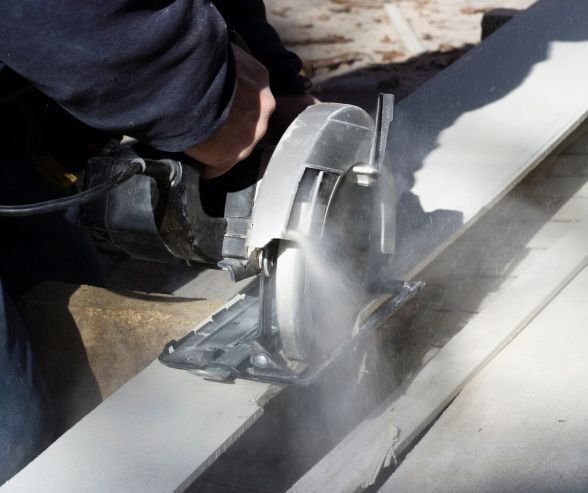
Sustainability and Non-Toxicity: Mataverde SaferWood
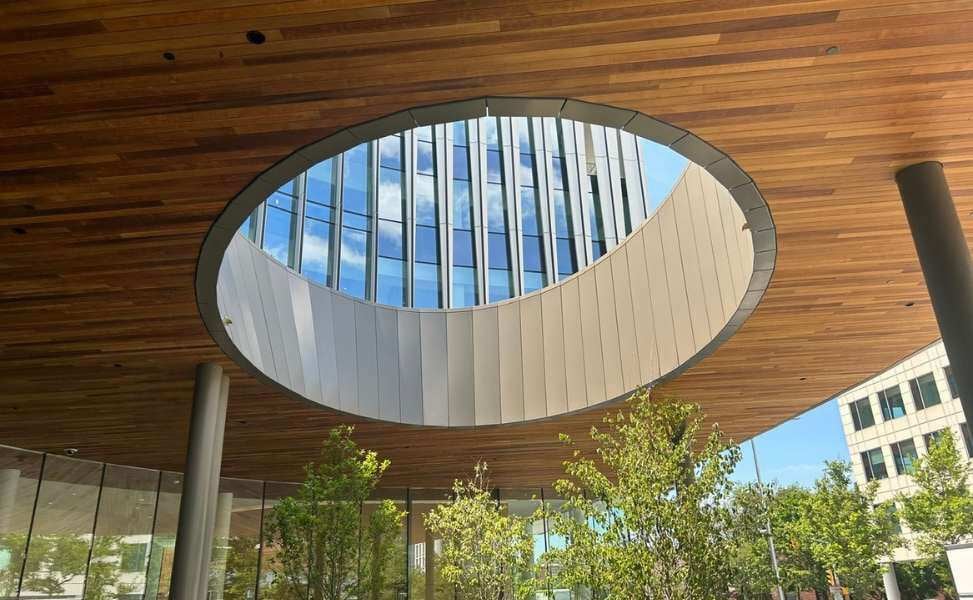 Mataverde SaferWood was used to create this atrium wood soffit that extends into the lobby on a New England commercial building, creating a warm and welcoming entry that also met their local fire codes
Beyond staying locked in place, Mataverde SaferWood uses a safe, fire-retardant formula. It is 100% non-toxic to people and the environment, even when cut and handled. It’s even approved for interior and exterior use.
You get to keep the natural beauty and durability of high-quality, fire treated wood while providing permanent, safe fire protection that is benign to the environment and the people who live and work around it.
Other ways Mataverde SaferWood offers excellent sustainability:
-
Responsibly harvested North American species.
-
It can be safely recycled.
-
High durability adds longevity and minimizes repairs.
 We are committed to sustainable harvests of North American tree species for Mataverde SaferWood
We stand behind Mataverde SaferWood and think you will love it, too. Order your sample now.
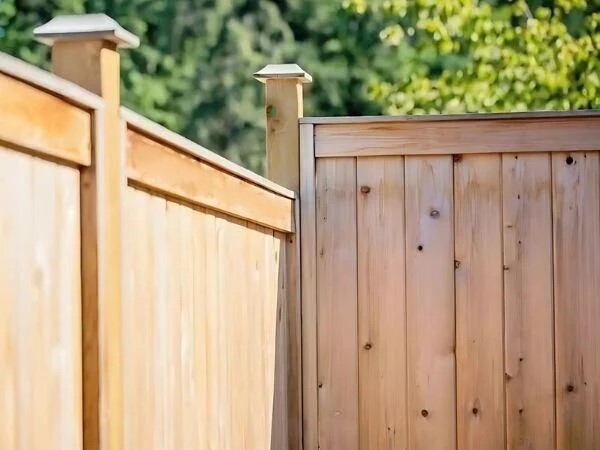 Mataverde SaferWood is available in a variety of fencing options including Western Red Cedar
Comparison Chart of Fire-Retardant Treatments
Mataverde SaferWood vs Commonly Specified Wood Alternatives:
%20(1).jpg?width=600&height=1200&name=Made%20From%20(Presentation)%20(1).jpg)
Ready to price your next fire zone project?
See how well Mataverde SaferWood meets project budgets, request your quotes here
or Contact our West Coast team.




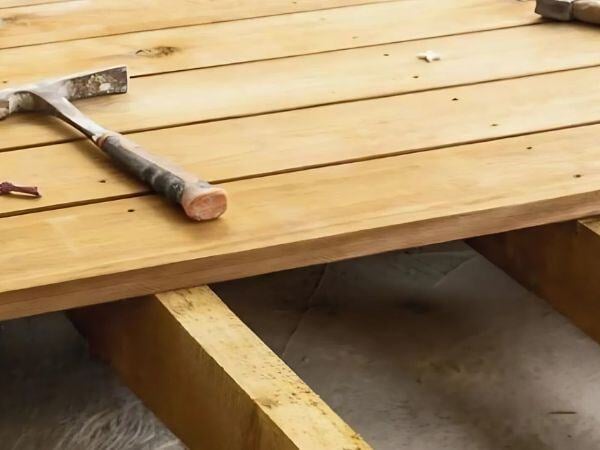 Mataverde SaferWood decking and dimensional lumber allow you to consistently design and build with non-leaching fire-retardant treated wood materials
A Permanent Fix: No Leaching, Ever
The Thermex-FR process used on Mataverde SaferWood is completely different from a surface coating or a loose additive. Instead, it’s an internal chemical change.
.jpg?width=973&height=573&name=Mataverde%20SaferWood%20ThermaWood%20Hem-Fir%20leaving%20the%20vacuum%20kiln%20(landscape).jpg) Mataverde SaferWood leaving the vacuum kiln after Thermex-FR fire-retardant wood treatment
Mataverde SaferWood leaving the vacuum kiln after Thermex-FR fire-retardant wood treatment
Here’s how it works:
Deep Infusion: The specialized Thermex-FR formula is pressure-fed deep into the wood's cells. To create a permanent, weather resistant bond in a kiln.
Permanent Bond: Surface applied Fire Retardants are not approved in IWUI & WUI zones. Crucially, Thermex-FR reacts and becomes chemically locked into the wood fibers. It's not sitting on the surface of the wood; it's part of the wood at the cellular level. This permanence guarantees the fire retardant will not be released into the soil or environment over the decades, maintaining both safety and sustainability.
Non-Leaching: Because the retardant is permanently bonded (or fixed-fire retardant), it cannot wash out or off, even when the material is exposed to constant outdoor moisture and rain. This eliminates the risk of harmful chemical runoff into the environment.
Resists Moisture Problems: Unlike some older treatments that absorb moisture and can corrode fasteners, Thermex-FR is non-hygroscopic. This means it won't draw in water, keeping your materials stable.
Want to know more about this treatment? Watch the SaferWood Thermex-FR video here.
Choosing Mataverde SaferWood provides the trifecta of modern construction requirements: Permanent fire protection (Class A) and ignition resistance, non-leaching and permanent fire-retardant treatment, and non-toxic formulation. It means you no longer need to compromise environmental responsibility for critical fire safety or aesthetics.
Specify Mataverde SaferWood for your next project and build with confidence that you are making a smart fire-resistant material choice. Ready to integrate truly sustainable and safe fire-resistant wood into your design?
Contact us with questions, to price your project, get samples, or for additional information.
Mataverde SaferWood FAQ: The Future of Fire-Resistant Wood
Q: What is Mataverde SaferWood?
A: Mataverde SaferWood is a premium, permanent, non-leaching, fire-resistant treated wood for siding, decking, and fencing. It offers a Class A fire rating (the best possible) and is WUI (Wildland Urban Interface) approved.
Q: What is the main benefit of Mataverde SaferWood's fire protection?
A: It delivers permanent, fixed fire protection through the proprietary Thermex-FR® process. The fire retardant is chemically locked into the wood fibers, guaranteeing it will not fade, wash away, or leach out for the material's entire lifetime.
Q: What fire rating does Mataverde SaferWood achieve?
A: It achieves the highest possible rating: Class A fire rating and is ignition resistant.
Q: Is Mataverde SaferWood an environmentally safe product?
A: Yes. The Thermex-FR process uses a 100% non-toxic, eco-friendly formula that is benign to people and the environment. Crucially, it is non-leaching, preventing harmful chemicals from polluting soil and water, unlike Brominated Flame Retardants (BFRs) or Zinc Borate.
Q: Why is "non-leaching" important?
A: Non-leaching means the fire-retardant chemicals cannot wash out of the wood when exposed to rain and weather. This eliminates the serious environmental and health hazards associated with leaching treatments like Portland Cement and Zinc Borate (which is harmful to plants and aquatic life).
Q: How is Mataverde SaferWood sustainable beyond its non-leaching quality?
A: It is made from responsibly harvested North American species, offers high durability for longevity, and can be safely recycled.
Q: Can Mataverde SaferWood be stained or painted?
A: Yes, it is paintable and stainable, and it can also be refinished, offering great design flexibility and maintaining the warmth and look of real wood.
Q: Does the treatment affect the wood's durability or appearance?
A: No. Mataverde SaferWood features a mar-free surface and premium appearance grade, often with clear vertical grain options available. The treatment also makes the material non-corrosive and gives it excellent moisture and insect resistance.
Q: What species of wood are available for Mataverde SaferWood?
A: Species available include thermally modified hemlock cedar (e.g., ThermaWood FR Hem-Fir), western red cedar, pine, and others.
Q: How does the Thermex-FR® process work?
A: It's an internal chemical change, not a surface coating. The specialized Thermex-FR formula is pressure-fed deep into the wood's cells and then chemically locked into the wood fibers using a kiln. This makes the bond permanent and weather resistant.
Q: Does Mataverde SaferWood require a fire-retardant wall assembly as backing?
A: No, Mataverde SaferWood does not require fire-retardant treated wall assemblies as backing, simplifying design and installation for siding and soffits.

Related Posts